
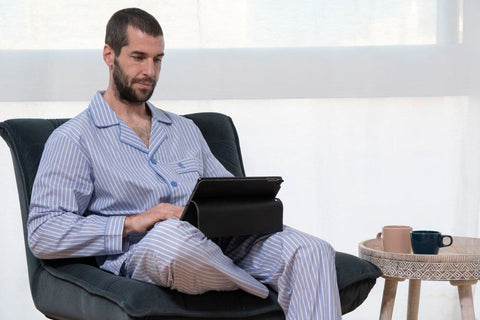
History and Evolution of Men's Pyjamas: From the Ottoman Empire to the Modern Gentleman
The Mens Pyjama has a history of more than 700 years. From the tunics of the Ottoman Empire to today’s premium cotton classic mens pyjama, the evolution of this garment reflects changes in society, fashion, and the concept of male well-being. At El Búho Nocturno, heirs to more than 60 years of textile expertise, we have been part of that history for decades — perfecting the classic pyjama for the modern gentleman. 117 verified reviews — 4.74 ⭐ average.
The origin of the pyjama: the Ottoman Empire and Asia
The word pyjama is not of Western origin. It comes from the Hindi “pae jama” or “pai jama”, meaning trousers, and originated in the Ottoman Empire in the 13th century. The first pyjamas were loose trousers with a string or cord at the waist, worn by both men and women throughout the Middle East and South Asia — Bangladesh, Pakistan, Iran, and India.
In the 14th and 15th centuries, Europeans discovered these oriental pyjamas and adapted them to their climates. By the 17th century, almost all Europeans were already wearing a type of pyjama similar to the Ottoman style.
The evolution of Mens Pyjama through the centuries
| Century | Dominant style | Fabric | Key feature |
|---|---|---|---|
| 13th–15th centuries | Ottoman tunics and hose | Linen, silk | Loose trousers + knee-length tunic |
| 16th–17th centuries | Long European nightgowns | Linen, cotton | Made at home by the family |
| 18th–19th centuries | Nightgowns with decorations | Flannel, percale, silk | The sewing machine and textile market appear |
| 20th century (1900–1950) | Modern two-piece pyjama | Cotton, silk | Definitively replaces the male nightgown |
| 20th century (1970–2000) | Unisex pyjama, oriental influence | Silk, cotton | Silk shirts inspired by Asia |
| 21st century (today) | Premium classic pyjama | 100% cotton poplin | Loungewear + rest + style at home |
The invention of the sewing machine: the turning point
Until the 18th century, most pyjamas were simple long nightgowns made at home. The invention of the sewing machine changed everything: clothing began to be bought ready-made in stores, the textile market appeared, and with it a variety of styles, fabrics, and designs. Over the next 200 years, pyjama style was determined by what culture considered right or wrong — a direct reflection of the social values of each era.
Mens Pyjama in the 20th Century: From War to Fashion
The great transformation of the mens pyjama came in the 20th century. Two-piece sets — trousers and shirt — definitively replaced the men's nightshirt, inspired by the simple yet comfortable military clothing of World War I. In the 1970s, Eastern influence brought silk shirts and a unisex look. The classic mens pyjama two-piece cotton set became the standard for the modern gentleman.
Mens pyjama today: loungewear, wellness, and style
In the 21st century, the mens pyjama has transcended the bedroom. It is loungewear, wellness, a statement that self-care matters even at home. The normalisation of remote work and the culture of rest have made the pyjama a daily garment — not just for sleeping, but for working from home, receiving guests, or simply enjoying a quiet morning.
At El Búho Nocturno, the classic mens pyjama in 100% cotton poplin is the culmination of 700 years of evolution: judo collar, custom buttons, embroidered logo, regular loose fit, and sizes from S to 5XL.
What our customers say — Verified reviews
⭐⭐⭐⭐⭐ “Excellent quality at an unbeatable price”
“That quality at that price is hard to find. The garments are finished with details typical of much more expensive clothing. The sizing is international and the sleeve length corresponds to the body size. Super happy with the service and the product.”
— Laura S., verified purchase — June 2026
⭐⭐⭐⭐⭐ “Very good product”
“Very good product.”
— Manuel V., verified purchase — June 2026
117 verified reviews — 4.74 ⭐ average — 100% authenticity
See the entire collection of mens pyjamas
The complete nighttime wardrobe of the modern gentleman
- Mens Pyjama classic — the timeless essential, in 100% cotton poplin, S–5XL
- Mens short summer pyjamas — fresh and elegant for warm nights, S–5XL
- Mens Pyjamas Flannel — Double-Peach for winter
- Dressing Gown for men — the perfect complement for mornings at home
- Mens boxer woven cotton — classic underwear, M–4XL
- Polo Men cotton — when loungewear goes out, S–5XL
FAQ — Frequently asked questions about the history of the Mens Pyjama
Where does the word pyjama come from?
The word pyjama comes from the Hindi “pae jama” or “pai jama”, meaning leg garment. It originated in the Ottoman Empire in the 13th century and arrived in Europe in the 14th and 15th centuries.
When did the modern two-piece Mens Pyjama appear?
The two-piece Mens Pyjama — trousers and shirt — was established in the first quarter of the 20th century, definitively replacing the male nightshirt. The influence of World War I military clothing was key to this change.
What is the best fabric for the classic Mens Pyjama today?
100% cotton poplin is the king fabric of the current classic Mens Pyjama: breathable, soft, durable, and with impeccable drape. For winter, the Double-Peach flannel provides the necessary warmth.
Is the Mens Pyjama only for sleeping?
No. In the 21st century, the Mens Pyjama is also loungewear: clothing to work from home, receive guests, or enjoy mornings at home with style and comfort.
What sizes do El Búho Nocturno’s pyjamas come in?
Available from S to 5XL with a European loose regular cut. If in doubt between two sizes, always choose the larger for optimal comfort. See the size chart.
What is El Búho Nocturno’s best-selling Mens Pyjama?
The cotton knit placket collar pyjama is the most demanded in our collection. For summer, the short judo pyjama in poplin leads seasonal sales.
Write your own chapter in the history of the pyjama.
Discover the complete collection of classic Mens Pyjama in cotton by El Búho Nocturno — 700 years of history in every garment. Delivery in 24–48h. 30-day returns. Trustpilot 4.7 ⭐.
El Búho Nocturno — Heirs of more than 60 years of textile expertise. Second and third generations dedicated to the elegance of rest.