
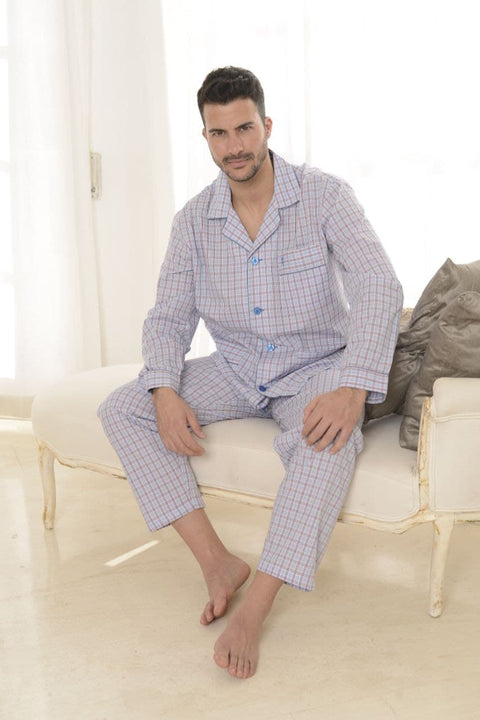
Any old t-shirt, sports pants, or torn boxer shorts have been declared the favorite pajama set for sleeping or being comfortable at home. This is how men dress nowadays, having left behind their childhood football pajamas. But really, the origins of pajamas started in a very different way, and it has taken a turn that is definitely worth evaluating and discussing how this garment is seeking to reclaim its place.
The contemporary man has adopted the same behavior pattern regarding the use of pajamas: they tend to pair an old shirt with shorts. In fact, a 2004 survey by ABC News found that only 13 percent of men wore clothing intended for resting, and even so, this percentage was declining.
What Happened to Pajamas?
So, we have to start asking ourselves: What happened to pajamas? What is known about those two-piece garments that, in case you didn’t know, offer countless benefits when sleeping?
Well, according to historians in the textile industry, they assure that pajamas are not dead. Currently, somewhere in the world, pajama sets are being sold at a high price. Of course, there are also more affordable options, but whether men wear them or not is another matter.
Here, a study by the pajama company Sleep Jones revealed that only half of their customers wear their pajamas when sleeping.
“Pajamas are a fashion statement now,” say fashion and design experts at The New School. They add that pajamas are still part of men’s wardrobes; the only difference is that these garments are more likely to be found in the closets of the upper class, while average middle-class young men opt for the famous old shirt and boxer shorts.
Origins of Pajamas: What Were They Like Before?
It’s funny because that’s how the pajama movement started in its beginnings. Originally, pajamas come from Indian fashion. During the British period, colonists noticed lightweight pants without cords and agreed they looked quite comfortable and nice, so they brought them to England with them.
Therefore, among the upper class, pajamas would be paired with a jacket to avoid wearing a nightgown.
Previously, men and women wore the same thing to sleep. On one hand, there was a nightgown that extended almost to the floor. Meanwhile, for the lower class, the same garment was seen but tended to be a bit shorter since it could be the same shirt they used to work during the day.
Later, what is known as the “dressing gown” appeared. This set became popular among the wealthy who often met at home with their family and friends. They were made with beautiful fabrics and included intricate designs, becoming a status symbol throughout Europe and America.
At this point, for the lower class, the nightgown remained their main sleepwear until some decades into the 20th century, as it was the warmest way to dress at home before central heating. The high collar, wide sleeves, and mid-calf or slightly longer length were the most viable options to stay warm, unlike two-piece sets. It wasn’t until the 1920s that pajamas began to broaden their horizons among mainstream trends.
Once central heating was established, sleepwear suddenly took on a different focus and was seen as a fashion matter rather than practical, and designs began to reflect various trends. While initially there was much influence from Middle Eastern design, by the 1930s more pajamas had a regal look, inspired especially by Russian military clothing.
The 1950s
By 1950, the elegant pajamas that set the standard were being replaced by more comfortable and casual styles made with elastic knit fabrics on top and finer cotton cloth pants. With this, basically, cheaper fabrics brought greater accessibility, marking the death of the nightshirt.
As time passed, not only did fabrics evolve, but also the colors imposed; stripes, polka dots, and other designs made their way into pajamas. Additionally, with the rise of radio and later television, this trend was fueled, and there was much talk about what to wear to lounge at home.
From the 70s to the 80s
In the 1970s, things changed and there was a resurgence of grandfather-style nightgowns and sets with shiny satin dressing gowns. This decade also marked the curious trend of multi-use clothing that could be worn both at work and in the nightclub. Following that, sportswear, originally intended for the gym, hit the streets, especially during the 1980s and beyond.
Dress codes had already been strongly altered, and the pajama set became a victim. By the 1950s and 1960s, a working-class man could come home and fall into a routine quite close to that of an aristocrat, where he took off his suit and put on a more comfortable sweater before changing into sleepwear.
However, as life’s pace accelerated, the popularity of wearing pajamas declined. From the 1970s and 1980s onward, men were more likely to come home and immediately put on a pair of sweatpants or shorts and had no further reason to change after that.
Now, today, a much faster lifestyle is observed, where dinner is eaten in front of the TV and phone calls are made while in the bathroom, breaking all kinds of decorum rules.
Expert Opinion
While some experts talk about the fall of conventional norms as we know them, designers see it as the rise of democracy. As a more open society develops and class walls crumble, along with pomp and formality.
Perhaps, then, in a time when democracy is perceived to be eroding, could pajamas make a comeback? Well, today in the fashion industry, there is something called “the return of elegance,” where formality in dressing is making a comeback.
For years, men’s fashion runways have been dominated by hoodies and sweatpants, but as an antidote to that, some designers have chosen to go in another direction. Perhaps the future will head another way, and that more formal outfit may be revived.
After this reflection, our purpose has always been for you to find in our pajamas the ideal garment for being at home and sleeping. Don’t hesitate, visit our website El Búho Nocturno and you will understand.