
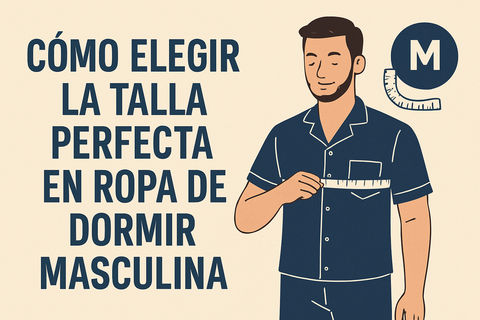
The Importance of Choosing the Correct Size in Men's Pajamas
Choosing the right size in men's sleepwear goes beyond mere nighttime comfort. A correct choice directly influences rest quality, garment durability, and overall well-being during home relaxation hours. Noble fabrics like combed cotton, brushed flannel, or velvet require a specific fit to fully display all their thermoregulatory and comfort properties.
The male body shape presents anatomical particularities that require specialized attention when sizing pajamas. Chest width, abdominal circumference, and limb length vary considerably among individuals, creating the need to understand specific sizing systems for nightwear.
A poorly sized pajama can cause circulatory restrictions, skin irritations, or limited movements during REM sleep. Conversely, an excessively loose garment can create uncomfortable fabric bunching or loss of the material's thermal properties.
Fundamentals of the Sizing System in Sleepwear
The sizing system for men's sleepwear operates under specific parameters that differ substantially from outerwear. Manufacturers specializing in loungewear implement measurements that prioritize comfort and the natural movement of the body at rest.
Standard sizes (S, M, L, XL, XXL) correspond to specific ranges of body measurements, although each brand may have variations in their cutting patterns. This disparity makes it essential to know the specific sizing measurements of each manufacturer before making a purchase.
A quality pajama should provide freedom of movement without compromising elegance or proper fit during nighttime rest.
Natural fabrics like Egyptian cotton or Portuguese flannel undergo dimensional changes after the first washes. This phenomenon, known as shrinkage, should be considered when selecting the initial size, especially in garments made with non-pre-shrunk fibers.
Differences Between Regular Sizing and Comfort Fit
The regular cut maintains a silhouette that fits closer to the body contour, ideal for athletic builds or individuals who prefer a more structured fit. In contrast, the comfort fit offers extra room in critical areas such as the chest, abdomen, and crotch, promoting circulation and prolonged comfort.
Velvet or heavy flannel garments usually benefit from a comfort fit cut due to the intrinsic thickness of these fabrics. Meanwhile, lightweight cotton pajamas can satisfactorily adapt to both cut styles according to individual preferences.
How to Take Accurate Body Measurements
Obtaining exact body measurements is the foundation for an accurate size selection. This process requires appropriate measuring instruments and specific techniques to ensure the precision needed for pajama sizing.
Use a flexible tailor's measuring tape, preferably made of fiberglass or non-stretch material. Measurements should be taken over light underwear or directly on the skin to avoid dimensional distortions.
Chest Circumference Measurement
Position the measuring tape horizontally around the chest, passing over the most prominent points of the chest. Keep your arms relaxed at your sides and breathe normally during the measurement. This measurement determines the size of the pajama jacket or T-shirt.
Record the measurement in centimeters and consult the manufacturer's specific size chart. Keep in mind that different jacket styles (buttoned open, closed T-shirts, or henley) may require particular adjustments to this base measurement.
Waist and Hip Measurement
For the waist circumference, place the measuring tape at the narrowest point of the torso, usually at the level of the navel. This measurement is crucial for the fit of pajama pants, especially those with elastic waistbands or adjustable drawstrings.
The hip measurement should be taken at the widest point of this area, approximately 20 centimeters below the natural waist. This dimension ensures that the pants do not restrict movement when sitting or lying down.
Inseam and Rise Length
The inseam measurement is taken from the groin to the ankle, following the inner leg line. For pajamas, consider subtracting 2-3 centimeters from this measurement to achieve an appropriate length that avoids excessive contact with the floor.
The rise, the distance from the waist to the crotch, affects comfort when sitting. Classic-cut pajamas usually have a more generous rise than outerwear, promoting comfort during relaxation activities.
Size Guide by Garment Type
Each category of men's sleepwear has specific sizing characteristics that require particular considerations. The variety of styles, from traditional jacket pajamas to contemporary flannel sets, demands a specialized approach for each type.
| Size | Chest Circumference (cm) | Waist (cm) | Hip (cm) |
|---|---|---|---|
| S | 86-91 | 76-81 | 91-96 |
| M | 96-101 | 86-91 | 101-106 |
| L | 106-111 | 96-101 | 111-116 |
| XL | 116-121 | 106-111 | 121-126 |
| XXL | 126-131 | 116-121 | 131-136 |
Buttoned Jacket Pajamas
Jacket pajamas represent the quintessence of masculine nighttime elegance. Their structured cut requires a precise fit in the shoulders and torso to maintain the proper drape of the fabric. The jacket should allow full button closure without creating tension in the chest area.
Ensure that the jacket shoulders align with the natural drop point of the arm. A jacket with excessively wide shoulders compromises the silhouette, while narrow shoulders cause movement restrictions and unsightly wrinkles.
Velvet and Flannel Pajamas
Velvet and flannel fabrics have specific characteristics that influence sizing. Their padded texture and superior thermal properties require additional considerations in terms of fit and comfort.
Choose a size that provides extra room compared to lightweight cotton pajamas. The intrinsic thickness of these materials can cause feelings of tightness if a size that is too snug is selected. Also, consider that these fabrics usually have less elasticity than synthetic fibers or contemporary blends.
Specific Factors by Fabric Type
The textile composition significantly influences the dimensional behavior of sleepwear. Each fiber has particular characteristics of elasticity, recovery, and dimensional stability that affect the perception of fit and the durability of the initial sizing.
100% cotton fabrics, especially those made from long fibers like Pima or Egyptian cotton, tend to experience controlled shrinkage during the first wash cycles. This characteristic should be considered when choosing the initial size.
Cotton Behavior in Sizing
Combed and mercerized cotton offers greater dimensional stability than carded varieties. Industrial finishing processes, such as sanforization, minimize shrinkage after washing, allowing for a more precise size selection.
Jersey cotton fabrics have natural elasticity that adapts to minor body variations. This feature makes them versatile options for individuals whose measurements fall between two standard sizes.
Characteristics of Flannel in the Fit
Brushed flannel has a surface texture that increases the apparent volume of the garment. This visual factor should be considered when evaluating the fit, as it can create perceptions of looseness that do not necessarily correspond to the actual measurements.
The density of the brushing affects the stiffness of the fabric and, consequently, its behavior during use. Flannels with intense brushing require slightly larger sizes to compensate for the material's lower flexibility.
Tips for Initial Fitting and Testing
Evaluating the correct fit in sleepwear requires specific techniques that consider the characteristic movements and positions of nighttime rest. An effective test should simulate the typical activities performed with this clothing.
Perform arm bending, knee raising, and torso twisting movements to verify freedom of movement. The fabric should not show excessive tension or cause restrictions during these basic movements.
Fit Verification in Different Positions
Adopt a seated position to evaluate the behavior of the pants in the crotch and thigh area. Well-sized pajamas allow this position without causing seam tightness or uncomfortable fabric bunching.
The side-lying position, common during sleep, should be performed comfortably without restrictions in the torso or limbs. Pay special attention to the armpit and shoulder area in jackets, as well as knee bending in pants.
- Verify that the sleeve cuffs reach the wrist joint
- Confirm that the length of the pants does not exceed contact with the floor
- Ensure that the buttons close without causing tension in the fabric
- Check that the side seams fall vertically without deviations
Critical Fit Area Evaluation
The areas of greatest tension during nighttime use include shoulders, crotch, waist, and cuffs. These zones require particular attention during the initial fit evaluation.
The shoulders should allow wide movements without excessively shifting the garment. A properly tailored jacket maintains its position during normal arm movements without requiring constant adjustments.
The crotch area in pants should provide enough room for bending movements without causing discomfort. Consider that during sleep, various positions are adopted that may require greater freedom of movement than during daytime activities.